Apprenticeships
The ultimate introduction to apprenticeships: what they are, how they work and how to get involved.
The FTA Apprenticeship
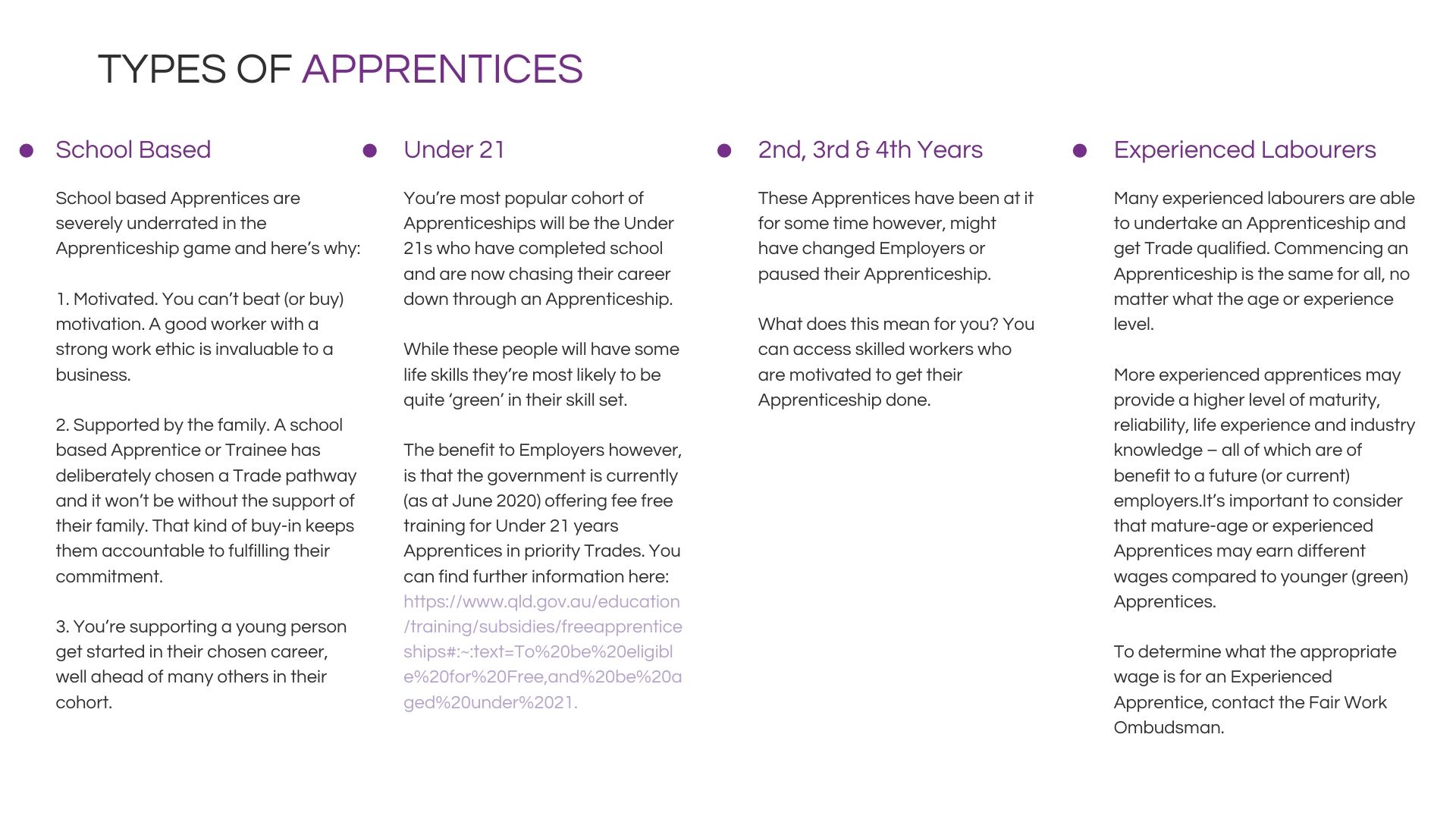
Foundation Training Australia specialises in apprenticeship and traineeship programs. We offer a variety of courses designed to help you gain recognised qualifications and build practical skills. Apprenticeships combine paid employment with structured training and are available on a full-time, part-time, or school-based basis, allowing students to complete part of their training while still in secondary school.












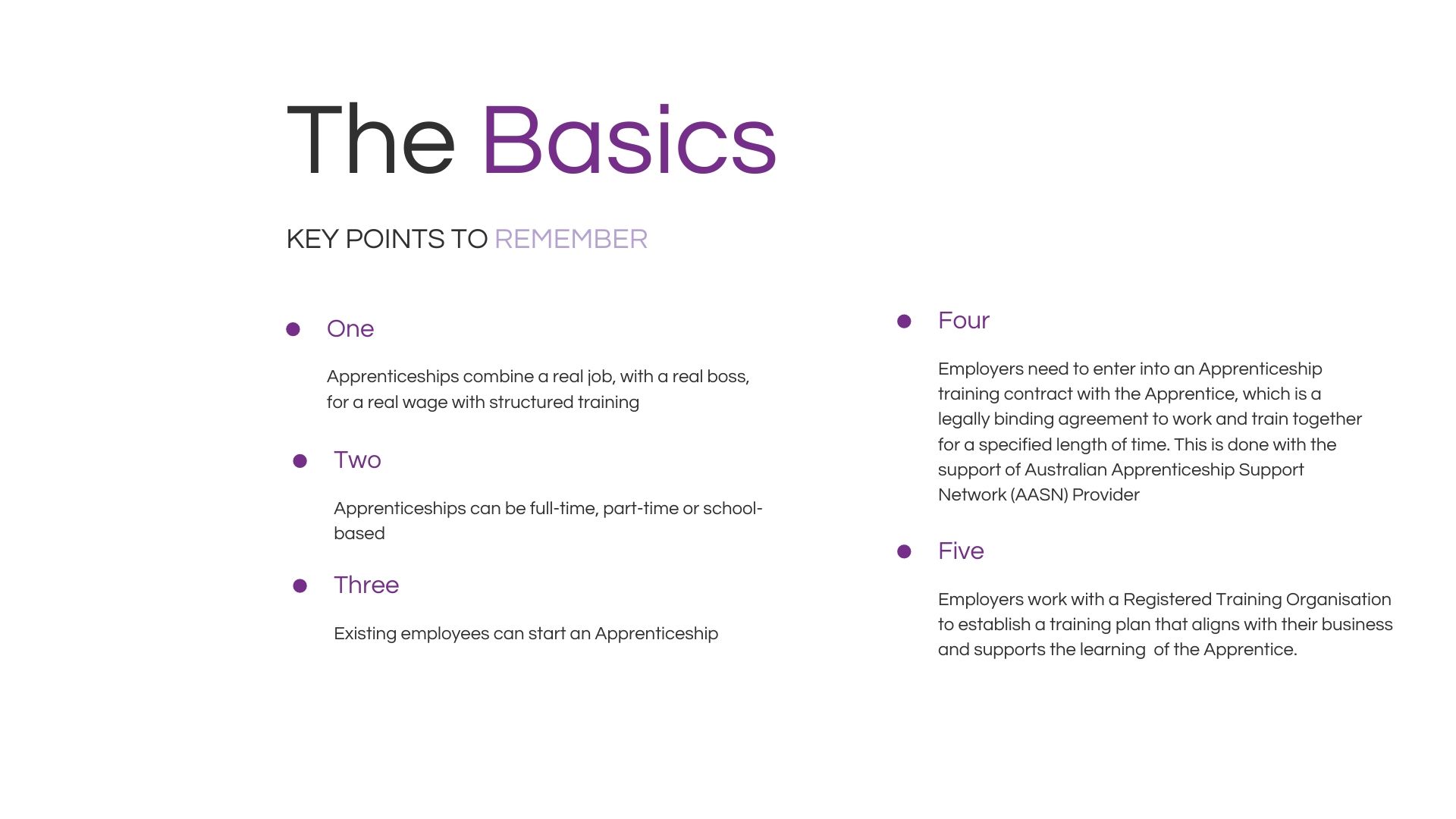
Apprenticeships are offered across many industries and are a gateway for new and existing workers to gain a formal qualification, while on the job. Civil Construction, Building and Construction, Business and Horticulture are just a few industries that support the apprenticeship learning pathway.
During an Apprenticeship you’ll be supervised by your employer while learning on the job, and using the latest online technologies as well as off the job training. With this mix of paid work and structured training, you will get the opportunity to put into practice the theory learnt every day, and once successfully completed (depending on your Apprenticeship between two to four years) your qualifications are recognised Australia-wide.
An apprenticeship is just the starting point to launching your career pathway.
Opportunities and challenges of hiring an apprentice
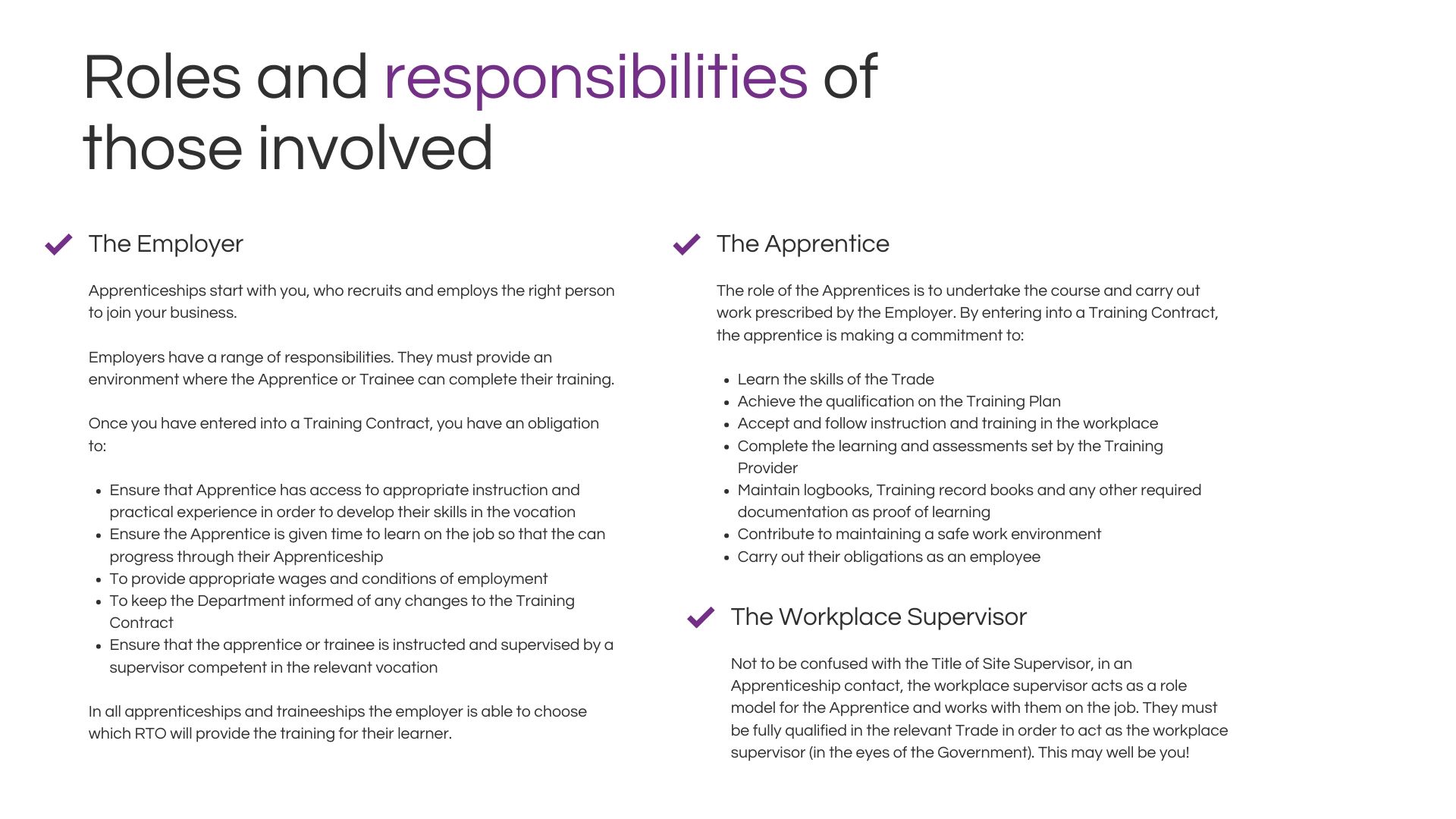
- The government offers some great financial incentives for employers.
- An Apprentice can be any age, with or without previous experience.
- Apprentices will have a genuine interest and desire to learn.
- You are supporting the growth of the industry.
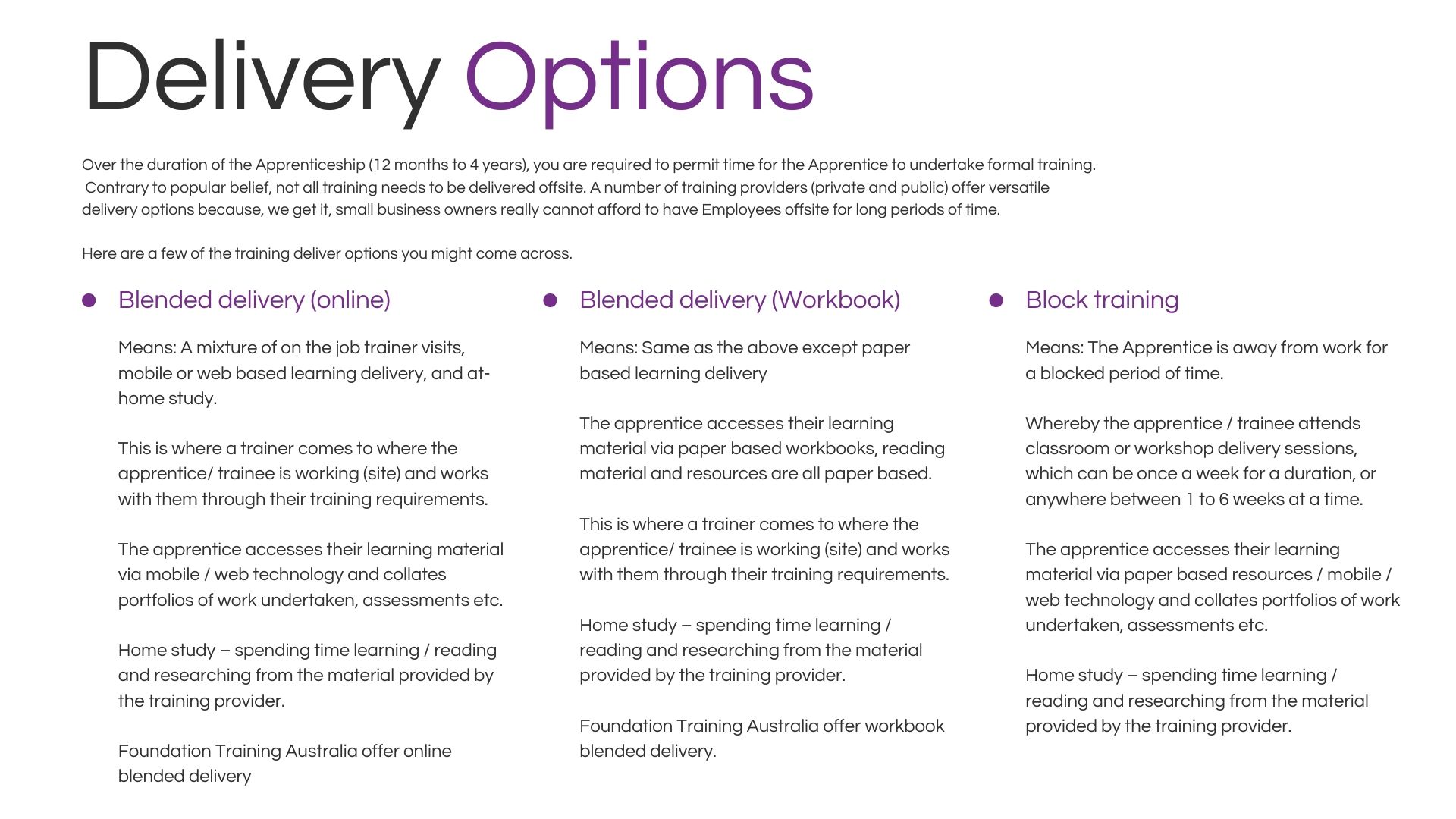
- Flexible and adaptable delivery methods to suit you.
- Structured on-the-job training plans to ensure the apprentice is developing relevant real skills.
- More qualified staff will give you the opportunity to tender for larger jobs.
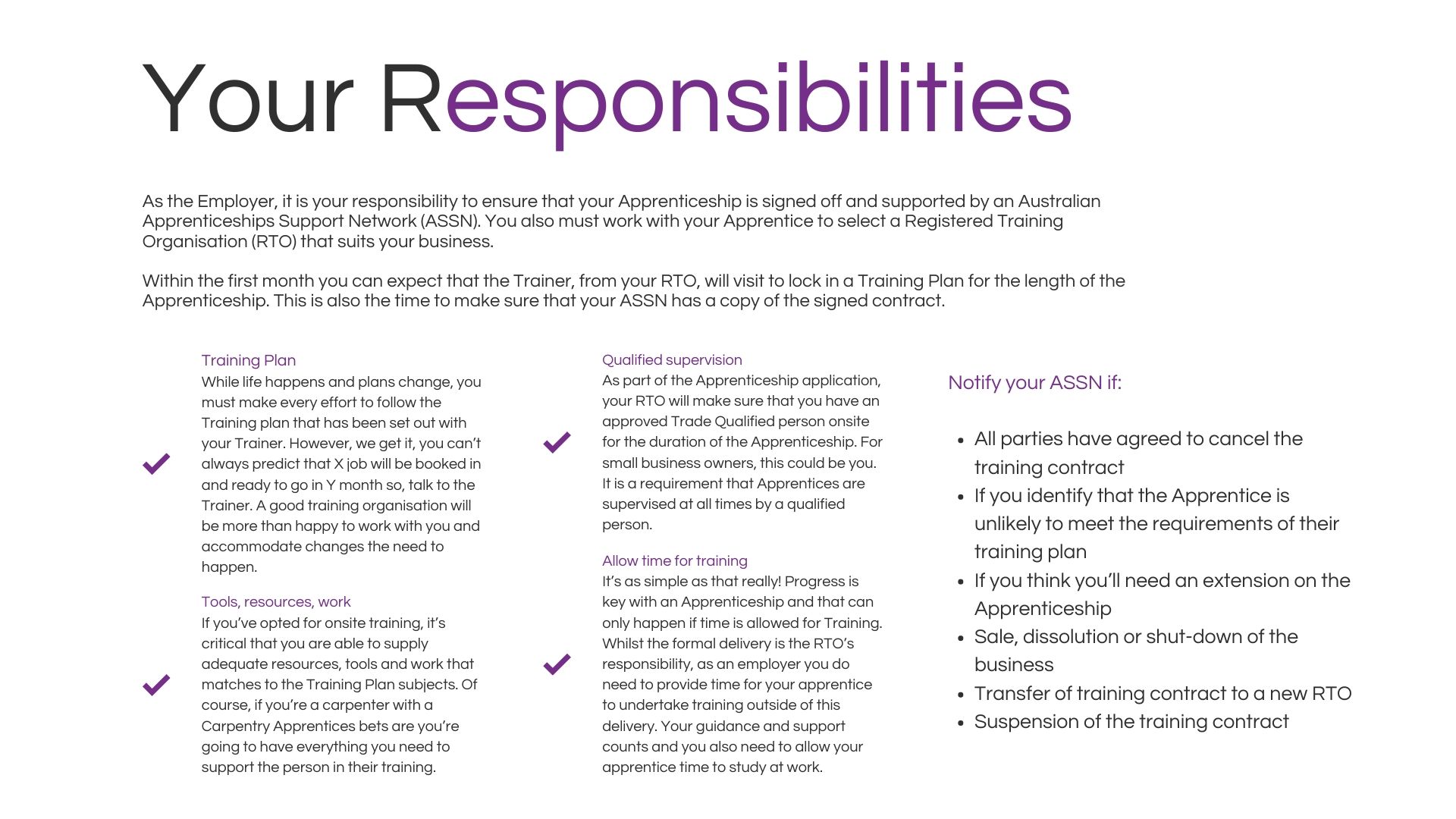
- You need to give time to train and support your Apprentice while on the job.
- It is a financial commitment, one that needs to be fully considered.
School-Based Apprenticeships and Traineeships
A school-based apprenticeship and Traineeships allow senior high school students — usually in Year 10, 11 or 12 — to undertake paid employment while completing their Senior Certificate. Students combine structured training with practical workplace experience as part of a formal training contract.
To meet the requirements, students must complete a minimum of 375 hours (approximately 50 days) of paid employment within each 12-month period from the commencement date of the apprenticeship or traineeship. The arrangement must also be reflected in the student’s school timetable for the program to qualify as school-based.
In Queensland, VET qualifications completed as part of a school-based traineeship or apprenticeship contribute credits towards the Queensland Certificate of Education (QCE).
Typical QCE Credit Allocation
- Certificate II → 4 QCE credits
- Certificate III → 8 QCE credits
- Certificate IV or higher → up to 8 QCE credits (maximum that can contribute)
Important Notes
- Students need 20 credits total to achieve their QCE.
- The qualification must be completed (or specific units of competency completed, depending on the pathway) to receive the full credit.
- School-based apprenticeships usually lead to a Certificate III, meaning students generally receive 8 QCE credits upon completion.
- School-based traineeships can be Certificate II or III, depending on the qualification.







Opportunities and challenges of doing an apprentice
| Advantages | Disadvantages |
|---|---|
| Get paid while you learn. | Not all industries or careers offer apprenticeships. |
| Gain real-life experience. | It is a big commitment; you must take responsibility for what you put into your apprenticeship (this isn’t a disadvantage if you’re committed). |
| Learn on the job. | |
| Gain a nationally recognised qualification upon completion. | |
| Mentorship from highly qualified trainers, support team, and employers. | |
| Flexible and adaptable delivery methods to suit you. |
Did you know?
At a time where AI is said to perhaps replace a lot of jobs, that skilled trades and vocational careers remain among Australia’s most in-demand occupations, making apprenticeships and traineeships a direct pathway to secure employment?
How to start an Apprenticeship
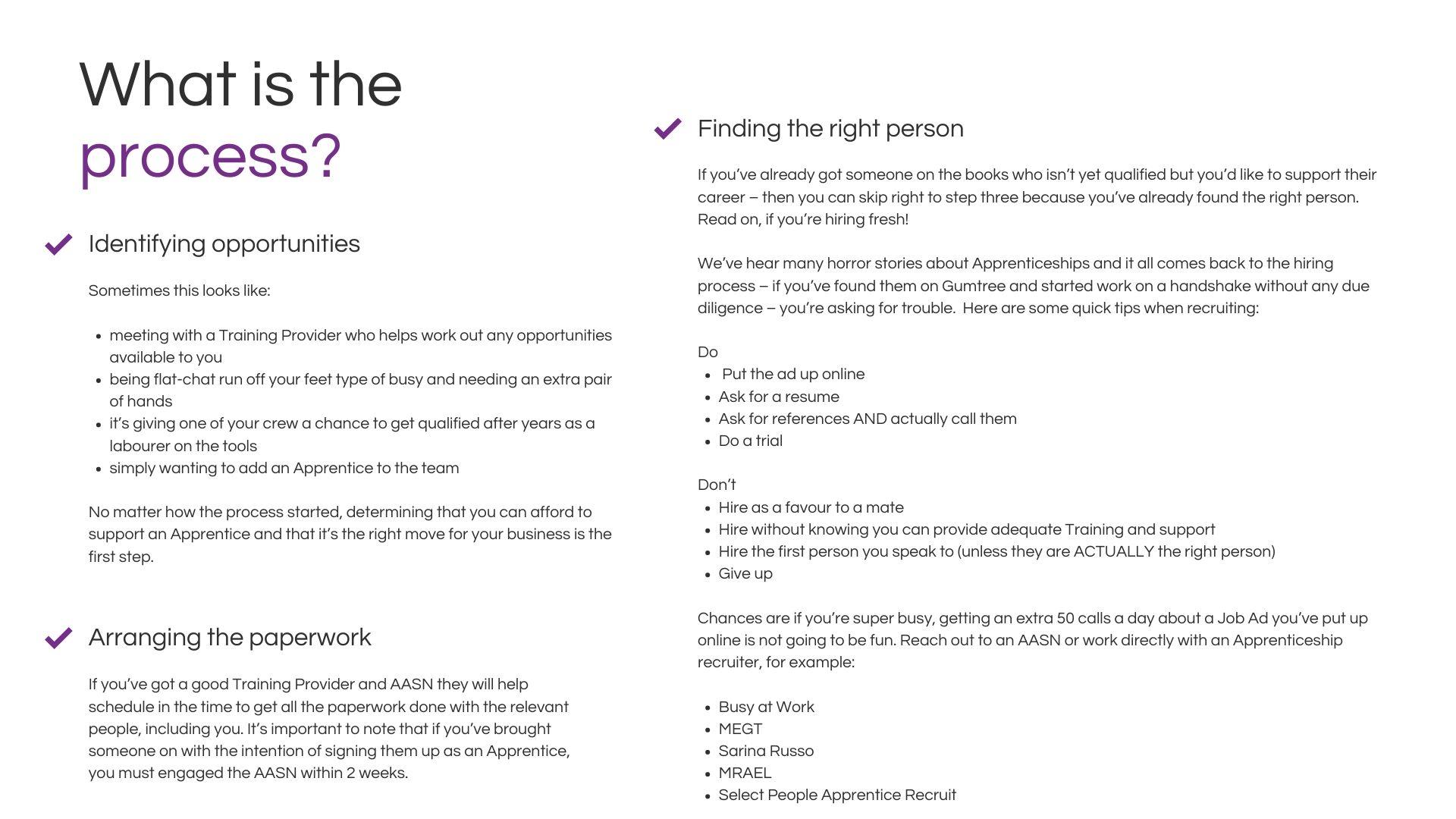
Starting an apprenticeship is a commitment – for both the Apprentice and Employer. Here is a step-by-step guide on how to get started with an Apprenticeship.
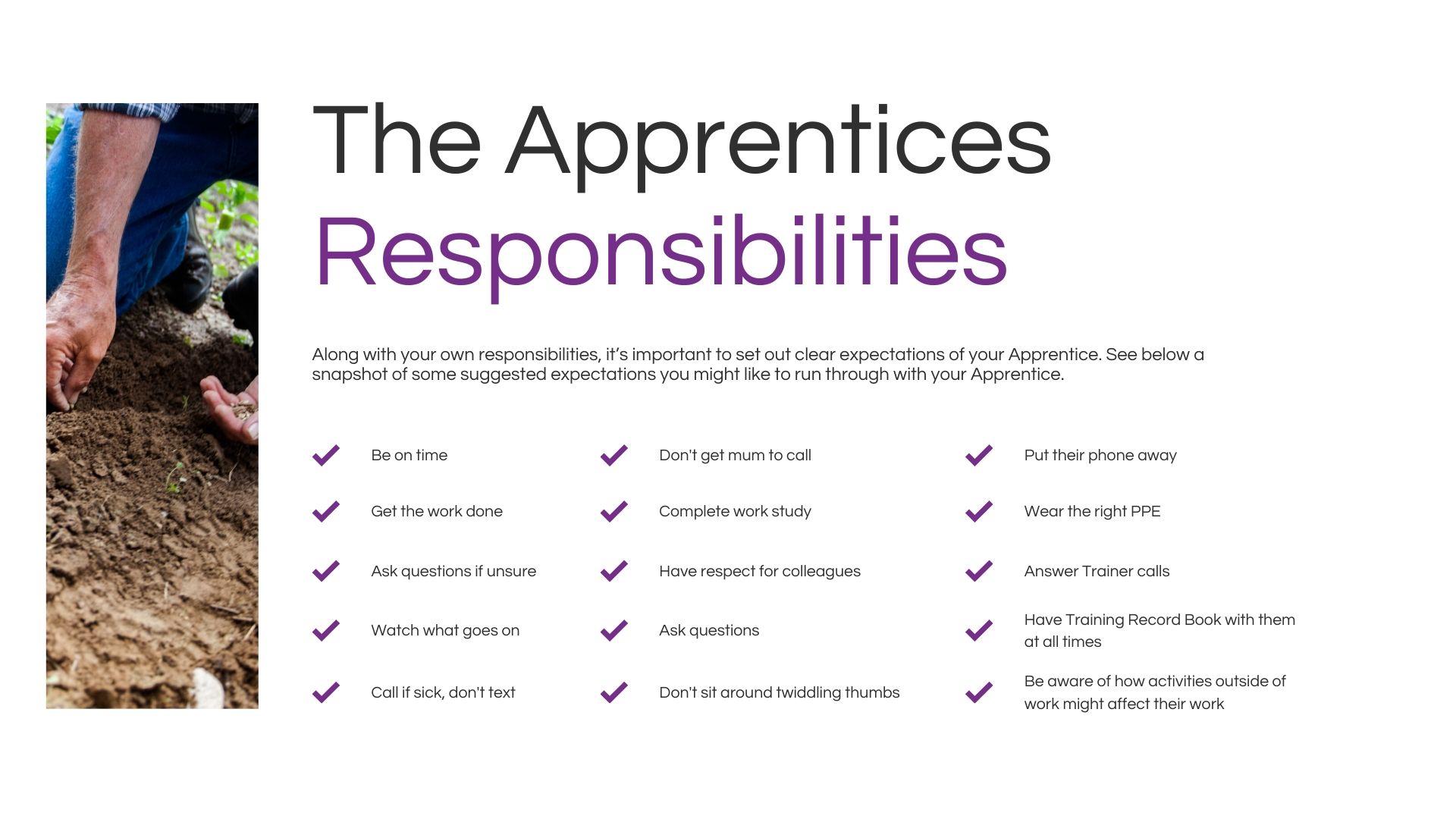
1. Know what you want to do
Being confident that the field of study you are about to enter is one you’ll enjoy is half the battle. If you’re not sure yet, here are some great tips to get you started:
- Consider this…. Are you someone that likes to work outdoors or in an office?
- Do you think of the details or prefer the big picture?
- How do you learn best?
- What job makes you excited?
- Speak with friends, family and people who work in the industry you’re interested in. Ask them what ‘a day in the life’ of their job is like.
- Consider doing a pre-apprenticeship course.
If you’re still stuck, referring to the Good Careers Guide or Job Outlook websites are great spots to find more about your career options.
2. Find an employer who will take you on as an Apprentice
For many successful Tradies (and other skills sets) an Apprenticeship is how they got started in their career. So don’t be afraid to start approaching local businesses and asking whether they’re looking to put on an Apprentice.
Make sure to create a resume that includes any work experience you have and skills that would be relevant to the job you are applying for or industry.
There is loads of help out there for job seekers! It’s always great to speak with employment service providers about any opportunities they have on the go that you might be a suitable candidate for.
3. Choose your training organisation
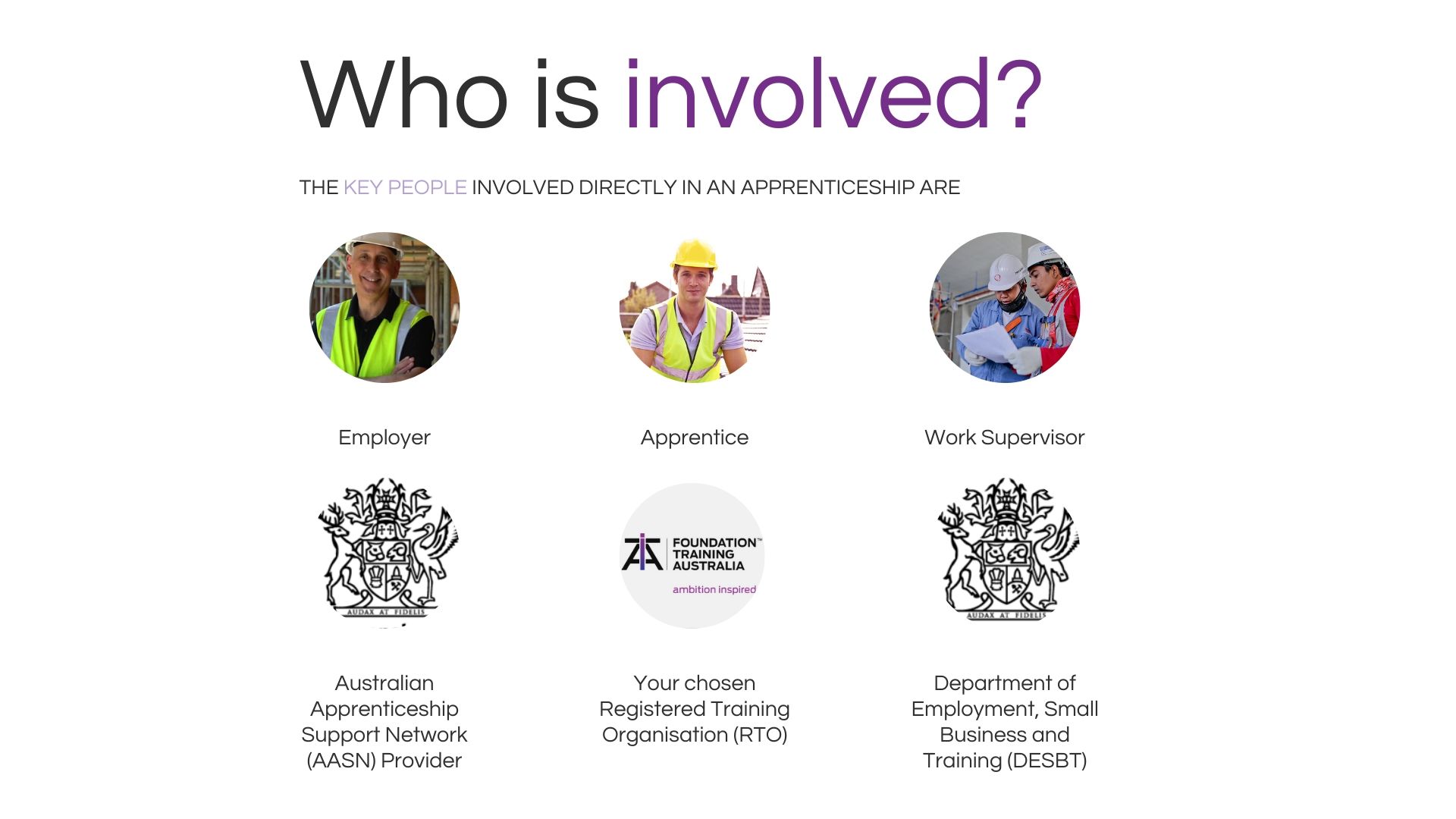
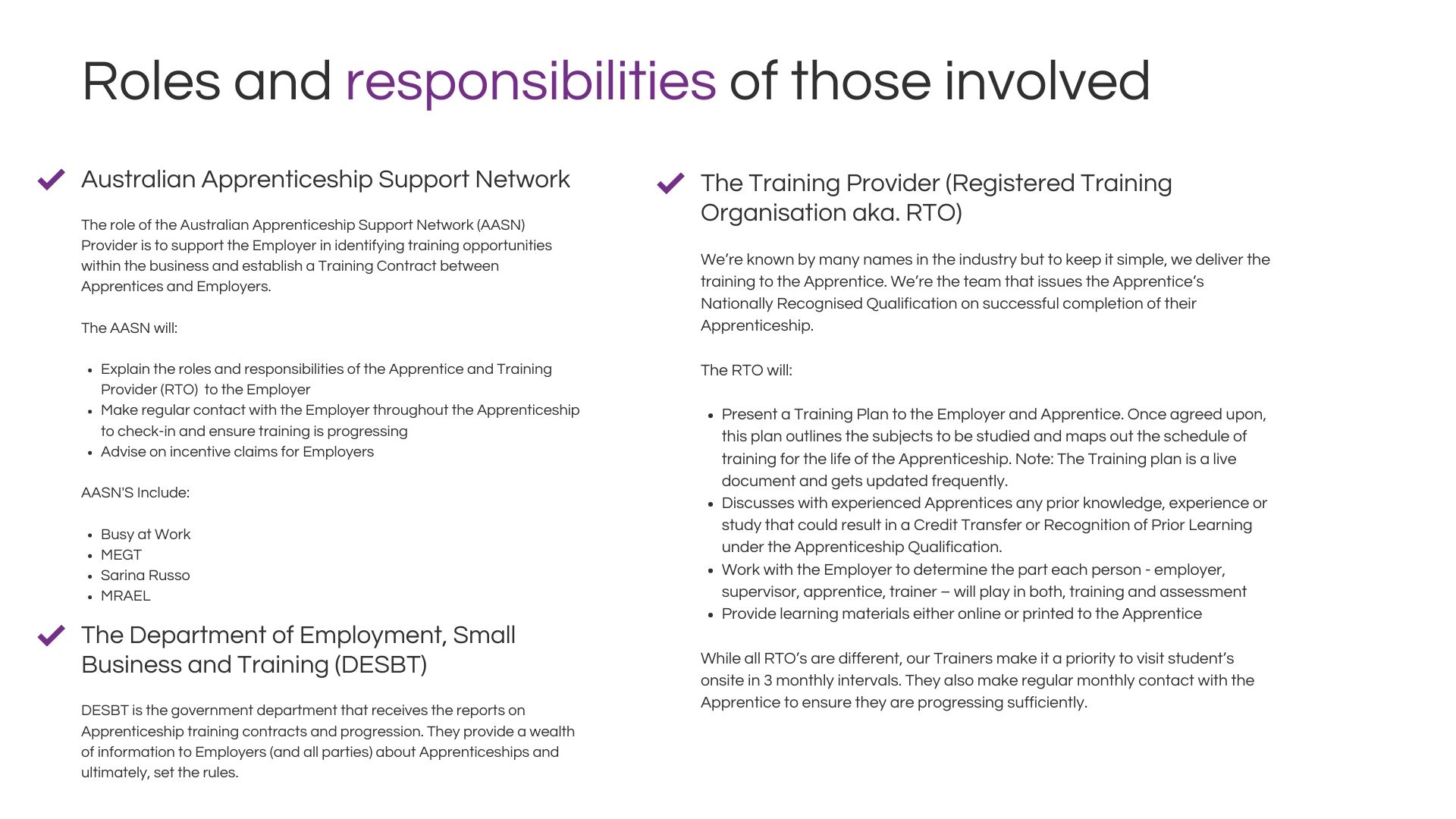
Together with your Employer you will select the right training organisation for your goals.
They will:
- Help you and your employer develop a training plan that outlines what you need to learn, by when and how it will be delivered
- Provide a training record where you log your training
- Deliver training and assess your achievement of skills
Upon successful completion of your Apprenticeship, you will be issued with a qualification.
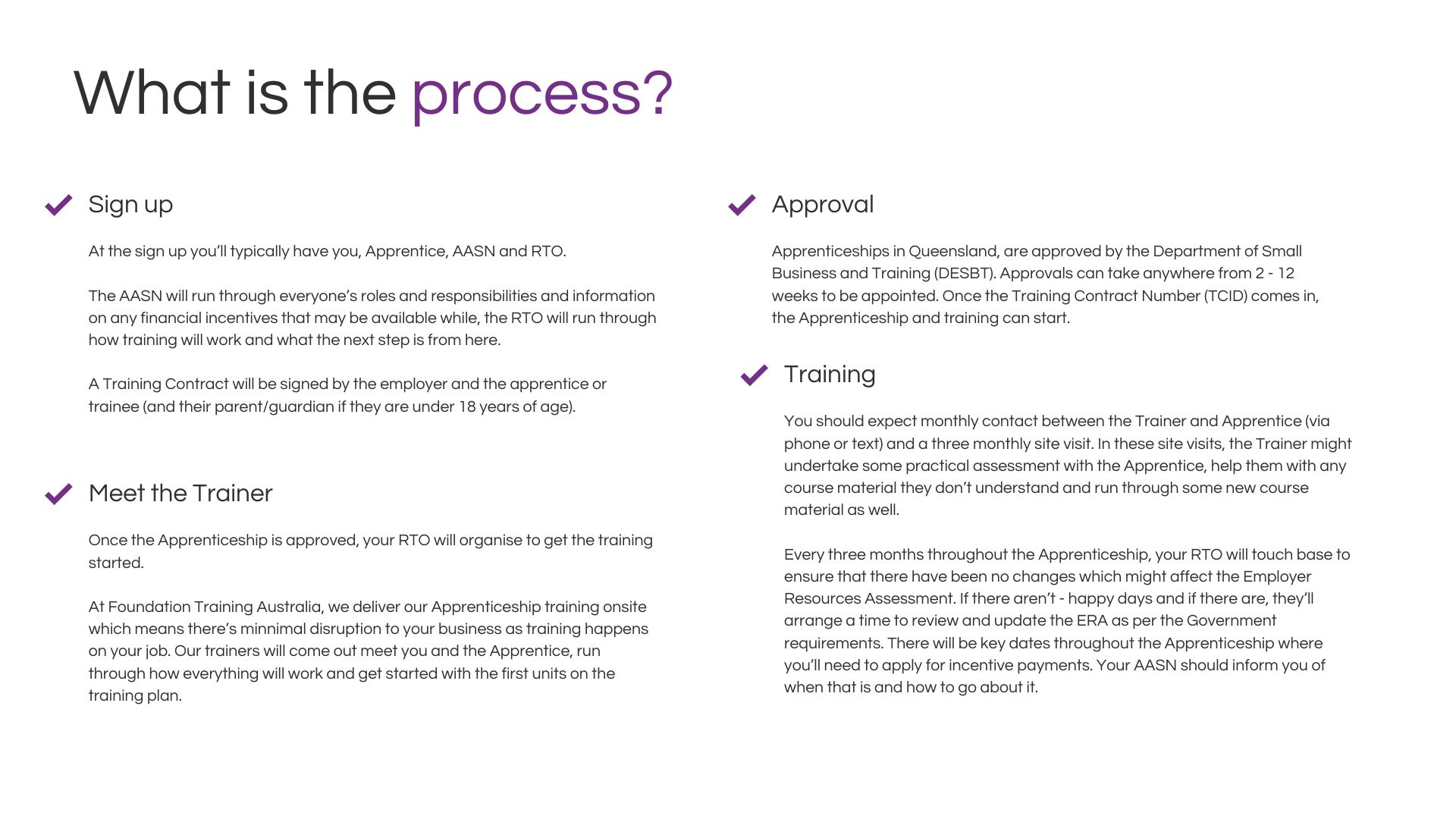
4. Work with an Australian Apprenticeship Support Network (AASN) provider
Your Employer will need to contact an AASN provider to organise the signing of a training contract. Within 14 days of the Apprenticeship starting, this contract needs to be signed by both Employer and Apprentice. Once the contract is signed it then needs to be given to the AASN provider who will then lodge the training contract.
5. Get Started
You will have, at most, a 90 day probation period to make sure that the arrangement is going to work for both Employer and Apprentice. Once the probation period is up, you will officially be contracted for the length of the Apprenticeship.
Apprenticeship vs. Traineeship
An Apprenticeship and Traineeship are both, sought after entry-level career pathways that are often used interchangeably.
Both pathways can claim the ‘earn while you learn’ tagline and are great options for anyone wanting to gain real, practical experience while completing a nationally recognised qualification. Each, can be undertaken under part time, full time or a school-based arrangement where some of the training is undertaken while the Apprentice or Trainee is still in high school.
While they are very similar, there is a small difference between the two.
An Apprenticeship typically takes three to four years to complete and traditionally covers trade skills in areas like engineering, building and construction, automotive and metal fabrication.
A Traineeship, on the other hand, covers a broad range of occupations and is delivered in a shorter timeframe (one to two years). You will often come across Traineeships in the Hospitality, Retail, Community Health and Business sectors.
Both are equally valuable choices when it comes to learning practical skills within the industry, it really comes down to what industry and option is right for you.
Did you know?
When students were asked to describe how they felt about VET training, 57% of students used the word “excited” and 51% of students used the word “happy"







Helpful Contacts
Department of Trade, Employment and Training (DESBT)
Advises and provides information to an Apprentice or Trainee’s enquiries and industrial relations issues.
Australian Apprenticeship Support Network (AASN)
Australian Apprenticeship Support Network (ASSN) providers are contracted by the Australian Government and have a Deed of Agreement with the Queensland Department of Education and Training to provide targeted services which deliver tailored advice and support to employers, apprentices and trainees. Also commonly known as the Apprenticeship Network provider, the AASN provider is the first point of contact for the administration of all training contacts.