
CPC31420 Certificate III in Construction Waterproofing
Become a Qualified Waterproofer
Meet the technical requirements for a Waterproofing Licence with QBCC.
Are you ready to get Trade qualified?
Are you tired of not being able to quote on good jobs because you don’t have the qual?
Do you want to work in a hands-on, fast-paced and down-to-earth industry?
Get your certification in Construction Waterproofing
This hands-on CPC31420 Certificate III in Construction Waterproofing course provides the practical skills required to undertake a range of waterproofing tasks in the commercial and residential building and construction industry.
Covering core competencies common to the construction industry you will also learn skills specific to waterproofing. Learn how to apply waterproofing below ground level and to internal and external wet areas to prevent water or dampness from damaging building walls and other structures.
The CPC31420 Certificate III in Construction Waterproofing can be completed as an Apprenticeship and meets the technical requirements to obtain your QBCC Waterproofing Licence.
Turn Learning into Career Success
- Nationally Recognised Qualification
- Hands-on experience in a practical environment
- We come to you – no more classroom training!*
CPC31420 Certificate III in Construction Waterproofing
An in-depth look at the course, to download your own copy, click ‘DOWNLOAD COURSE BROCHURE’ below.

Course Structure What this course offers
This CPC31420 Certificate III in Construction Waterproofing course is a trade level qualification that gives you the skills, knowledge and experience to be competent and feel confident onsite. It is aimed at anyone looking to work on residential or commercial projects with specialist waterproofing skills.
Ways to study
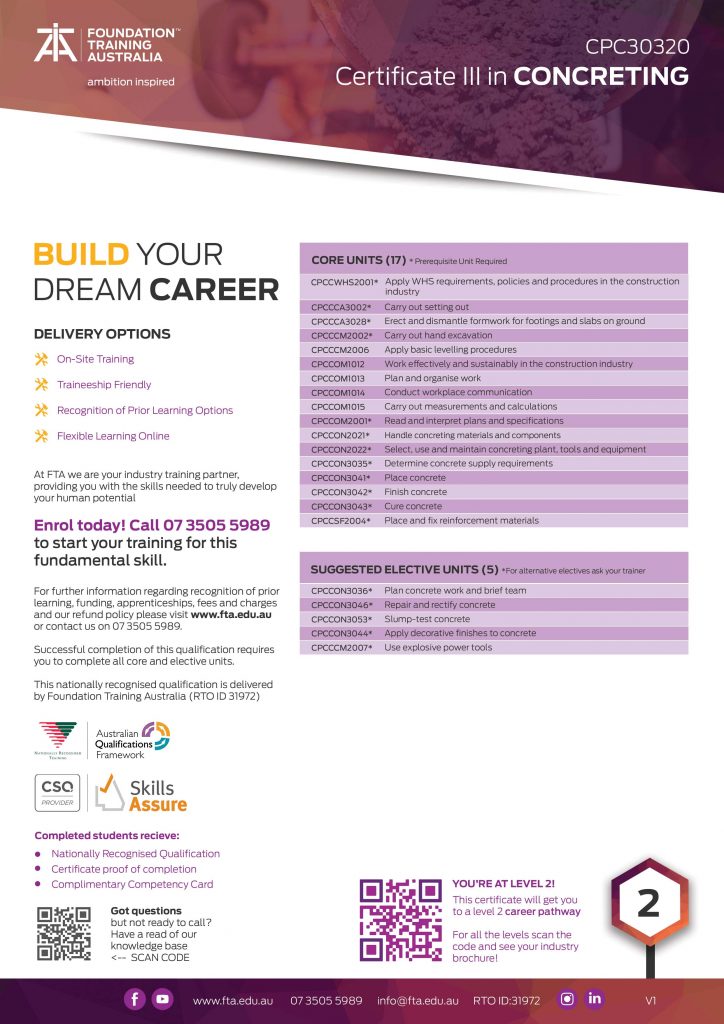
To achieve this qualification, you must demonstrate competency in 14 core units and 5 elective units from the options below.
* Prerequisite Unit Required
Core Units (14)
- CPCCWHS2001 – Apply WHS requirements, policies and procedures in the construction industry (Pre-requisite unit)
- CPCCWP3001* – Apply waterproofing system to below ground level wet areas
- CPCCWP3003* – Apply waterproofing process to external above-ground wet areas
- CPCCOM1015 – Carry out measurements and calculations
- CPCCOM2001* – Read and interpret plans and specifications
- CPCCWP3004* – Apply waterproofing remedial processes
- CPCCWP2001* – Handle waterproofing materials and components
- CPCCOM1014 – Conduct workplace communication
- CPCCOM1013 – Plan and organise work
- CPCCWP3005* – Assess construction waterproofing processes
- CPCCWP2002* – Use waterproofing tools and equipment
- CPCCWP2004* – Prepare surfaces for waterproofing application
- CPCCWP3002* – Apply waterproofing process to internal wet areas
- CPCCOM1012 – Work effectively and sustainably in the construction industry
Suggested Elective Units (5)
- CPCCCM2009* – Carry out basic demolition
- CPCCCM2006 – Apply basic levelling procedures
- CPCCCM2002* – Carry out hand excavation
- BSBESB301 – Investigate business opportunities
- BSBESB407 – Manage finances for new business ventures
This qualification meets one of the requirements for you to obtain a licence with your states regulatory body. Please consult with your local authority to ensure you are eligible and meet other criteria prior to commencing studies with us.
Scope of Work
- Apply, install and repair waterproofing, including surface preparation.
- Apply or install material or systems for preventing moisture penetration
Qualifications Required
Any one of the following:
- CPC31411 Certificate III in Construction Waterproofing.
- Successful completion of the course the authority considers is at least equivalent to a course mentioned above.
- A recognition certificate as a qualified Waterproofer.
Managerial Qualification
Keen to get your trade contractor or nominee supervisor licence? After the completion of this qualification we recommend that you undertake an Approved Managerial Course for Trade Contractors. FTA delivers the approved managerial qualification BSBSMB401 Establish legal and risk management requirements of small business – ask us about this today!
Note: This information is sourced from QBCC website and is accurate as at January 2022 for QLD licence holders only. For more information please refer to QBCC.
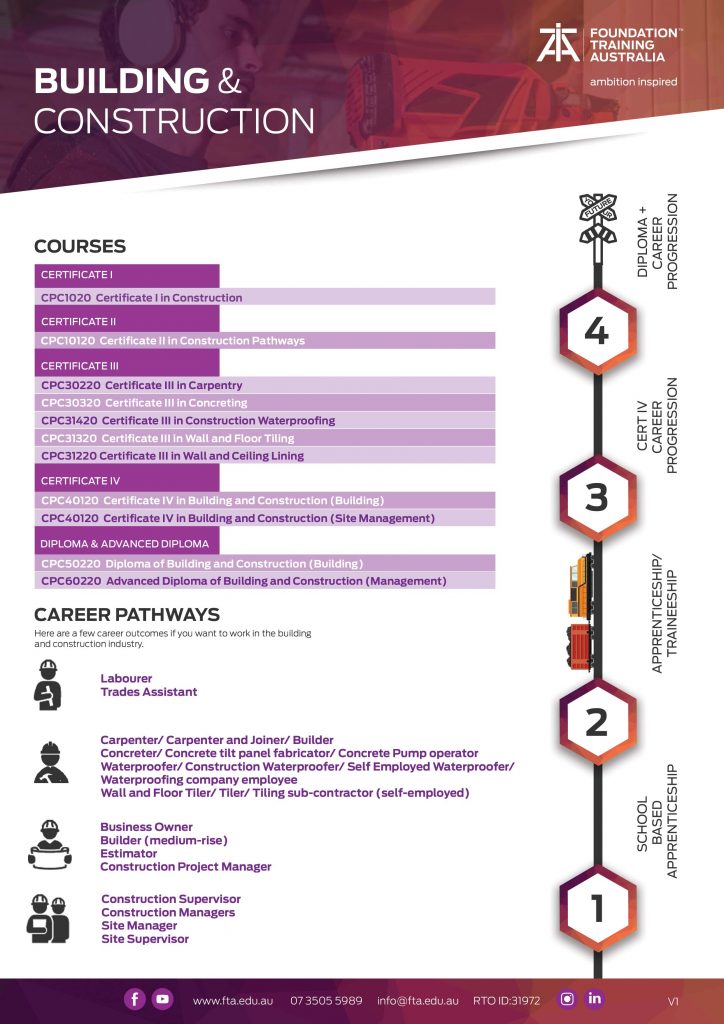
- Waterproofer
- Construction Waterproofer
- Self Employed Waterproofer
- Waterproofing company employee
The course duration will vary depending on your experience, skills and chosen study mode. As a guide:
- Apprenticeship: Between 12 – 36 months depending on the type of apprenticeship and the apprentice’s ability
- Recognition of Prior Learning (RPL): 3-6 months- this term may be extended by Funding Criteria, amount of RPL awarded and subsequent Gap Training required. Eligibility criteria apply.
- CSQ: Program completion date is 20 September 2022 (for the Skills Assessment and Gap Training Program 2021/22 Contract).
- Fee for Service: 3-12 months subject to the amount of RPL awarded and subsequent Gap Training required.
Your skills will be assessed through a mix of practical and theory tasks. Which is essentially showing us what you’ve learnt and how you do it.
The theory will be assessed Online.
Practical Assessment will be conducted at your place of work or worksite with fit for purpose facilities and equipment which are to be made available to your FTA trainer & Assessor for training and assessment purposes.
Explore Your Funding Options
Take the next step towards your nationally recognised qualification with support designed for both students and employers. Discover how you can access funding to make training more affordable.
FEE FOR SERVICE
Our flexible Fee for Service model accommodates individuals ready to start their qualifications today while making ongoing, manageable payments.
CSQ
CSQ is designed to give Building and Construction workers recognition for skills learnt on the job but for which they don’t currently hold a formal qualification.
USER CHOICE
User Choice aims to provide funding for apprentices, trainees and their employers aligned to the skill needs of industry and changing government priorities.
Related Courses
Begin Your Journey
Our Difference

Learner Support

Limitless Learning
